Traditional Dining Room Design Ideas
Timeless elegance rooted in heritage meets gathering around the table. Visualize your dining room transformed with AI.
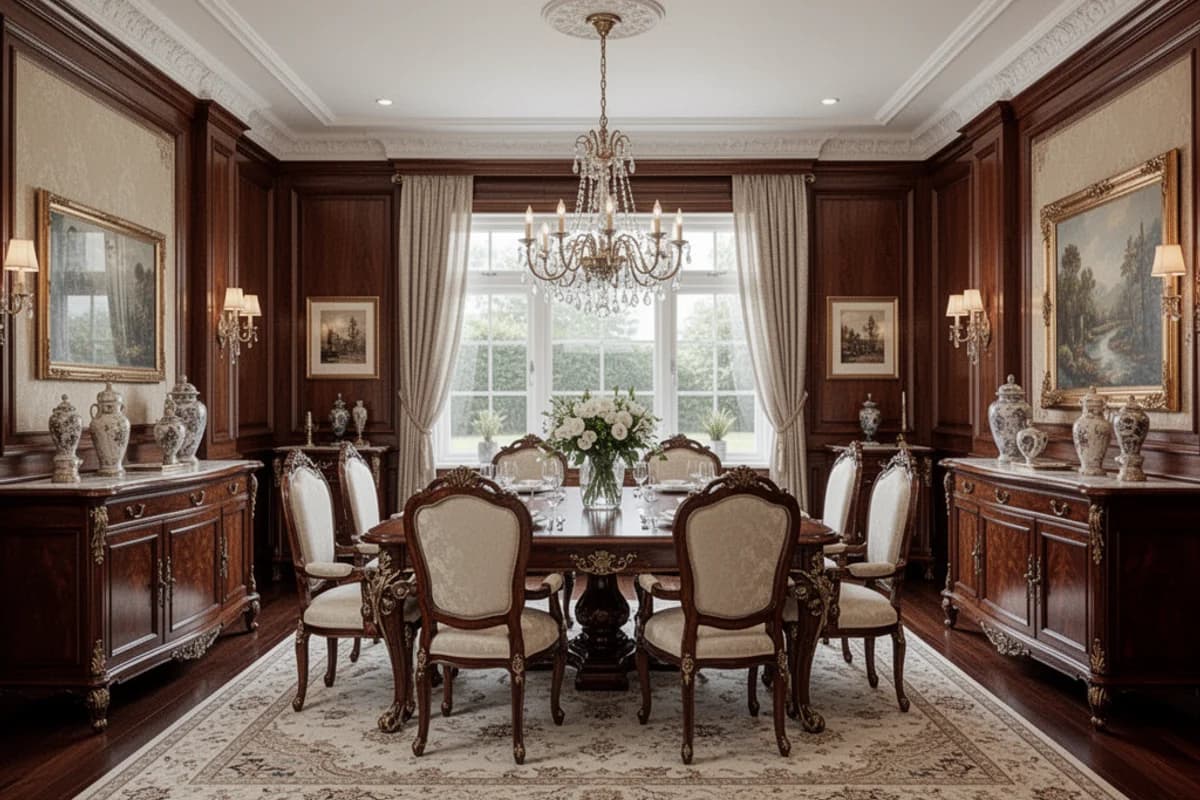
A traditional dining room represents one of the most compelling combinations in contemporary interior design. Timeless elegance rooted in heritage naturally aligns with the functional demands of a dining room, where gathering around the table becomes the primary design objective. This pairing works because both the traditional aesthetic and thoughtful dining room planning share a commitment to intentional, considered choices.
Implementing traditional design in a dining room means translating core principles—Symmetrical room arrangements, Rich wood furniture and millwork, Layered fabric patterns—into the specific context of this space. The dining room presents unique opportunities for traditional expression while demanding practical solutions for daily use. Successful traditional dining rooms balance aesthetic ideals with the reality of how you actually live.
When planning a traditional dining room renovation, consider how the style's signature elements interact with functional requirements. Choose dining chairs for comfort over style—guests will sit for hours Install a dimmer on dining room lighting for atmosphere control These practical considerations don't compromise the traditional aesthetic—they ensure it works for daily life.
The traditional color palette—featuring Burgundy, Navy blue, Forest green—adapts beautifully to dining room applications. These tones create the atmosphere central to traditional design while meeting the specific mood and function a dining room requires. AI visualization lets you see exactly how these colors will appear in your space before committing to any purchases or permanent changes.
Traditional Elements in Your Dining Room
- Symmetrical room arrangements
- Rich wood furniture and millwork
- Layered fabric patterns
- Brass and bronze hardware
- Decorative moldings and trim
Dining Room Renovation Tips
- Choose dining chairs for comfort over style—guests will sit for hours
- Install a dimmer on dining room lighting for atmosphere control
- Leave 36 inches minimum clearance between table edge and walls
- Consider acoustic treatments if hard surfaces create echo
Traditional Color Palette for Dining Rooms
These colors work beautifully together in a traditional dining room, creating the perfect balance of traditional aesthetics and dining room functionality.
Traditional Dining Room FAQ
Can traditional design feel fresh rather than stuffy?
Yes, through editing and contrast. Keep traditional bones—symmetry, quality materials, proper proportions—but reduce the number of accessories. Pair antiques with contemporary art for tension.
How do I incorporate traditional style in an open floor plan?
Use furniture arrangement to define distinct zones within the open space. Area rugs anchor seating groups, and consistent color palettes unite the areas while maintaining traditional principles.
What dining table shape works best?
Round tables encourage conversation and fit smaller spaces efficiently. Rectangular tables accommodate more people and suit narrow rooms. Oval tables combine conversation benefits with capacity. Consider your room shape and primary party size.
How large should my dining table be?
Allow 24-30 inches per person along the table edge. A 60-inch round table seats 6; a 72x36-inch rectangular table seats 6-8. Also ensure 36 inches from table edge to wall for chair clearance.
Create Your Traditional Dining Room
Upload a photo of your dining room and see it transformed into stunning traditional style in seconds.